A missing link in molecular dynamics analysis?
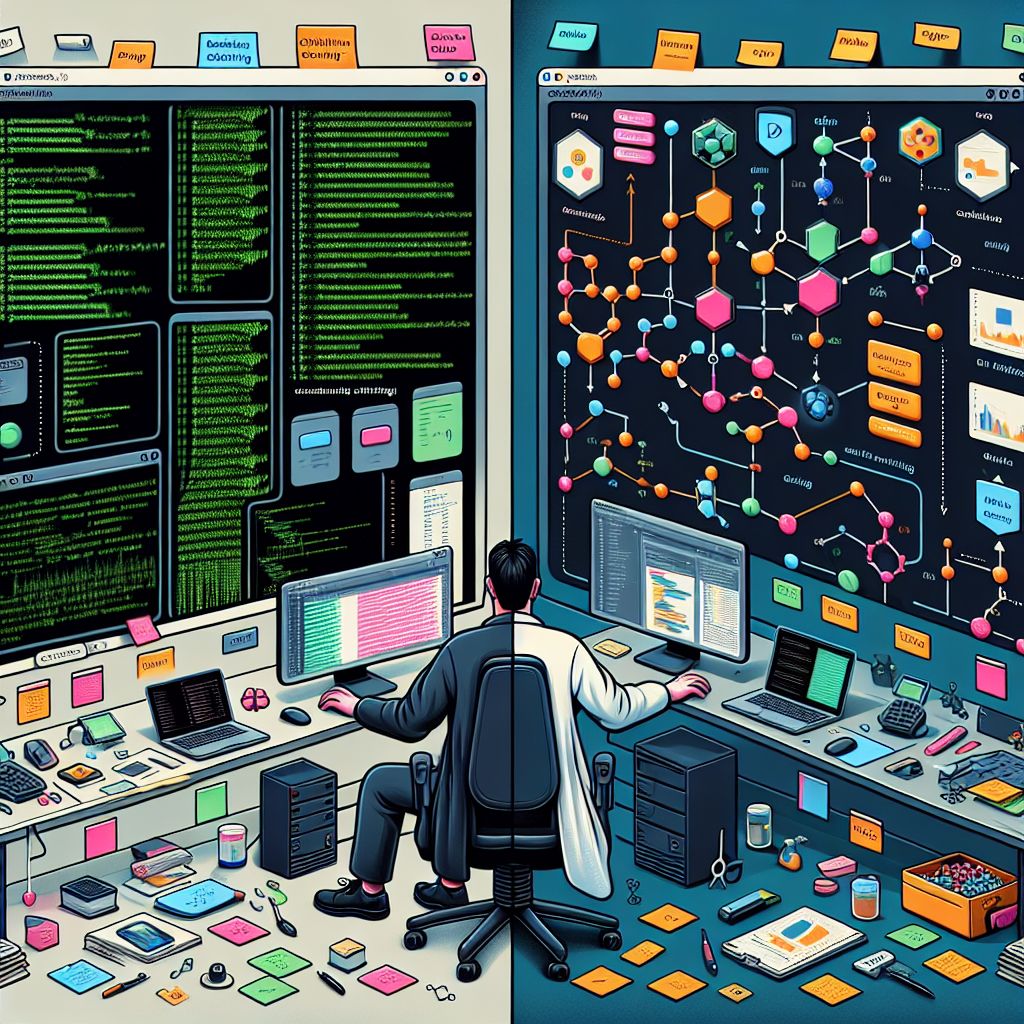
The Workflow Divide in Scientific Computing - Have you ever noticed that workflow-based software suites like Orange are all the rage in bioinformatics and chemoinformatics, but are as rare in molecular dynamics analysis as unicorns at a protein folding conference? 🦄
While data scientists and bioinformaticians routinely use intuitive drag-and-drop interfaces to create complex analysis pipelines, I've seen very few researchers do this in molecular dynamics. It's more common to write your own scripts and cobble together command line tools, use R or Jupyter notebooks. This discrepancy not only represents a technical gap, but in my opinion is also a significant barrier to entry and collaboration in molecular science.
In my experiments with workflow systems, I have found that they have the potential to democratise complex analysis in genomics and drug discovery by allowing researchers to focus on scientific questions rather than coding problems, accelerating discovery and enabling reproducibility.
In the meantime, MD analysis remains largely in the hands of specialists who are familiar with coding. However, this brings several challenges:
- Steeper learning curves for new researchers
- Lower reproducibility of complex analyses
- Limited cross-disciplinary collaboration
- Inefficient knowledge transfer between laboratories
- Barriers to the adoption of new methods
The irony here? Because molecular dynamics is highly visual, it lends itself particularly well to the graphical representation of workflows. Imagine a future where a researcher can design a complex MD analysis pipeline through an intuitive interface, share it with colleagues and even integrate it into existing bioinformatics workflows — all without sacrificing analytical performance or customisability.
What is your experience with MD analysis workflows? Have you found tools that successfully bridge this gap? Or are you one of the many scientists who would welcome more intuitive interfaces for molecular dynamics?
#MolecularModelling #Workflows #ComputationalChemistry #BioinformaticsTrends #ScientificComputing #MolecularDynamics
(also posted on LinkedIn)