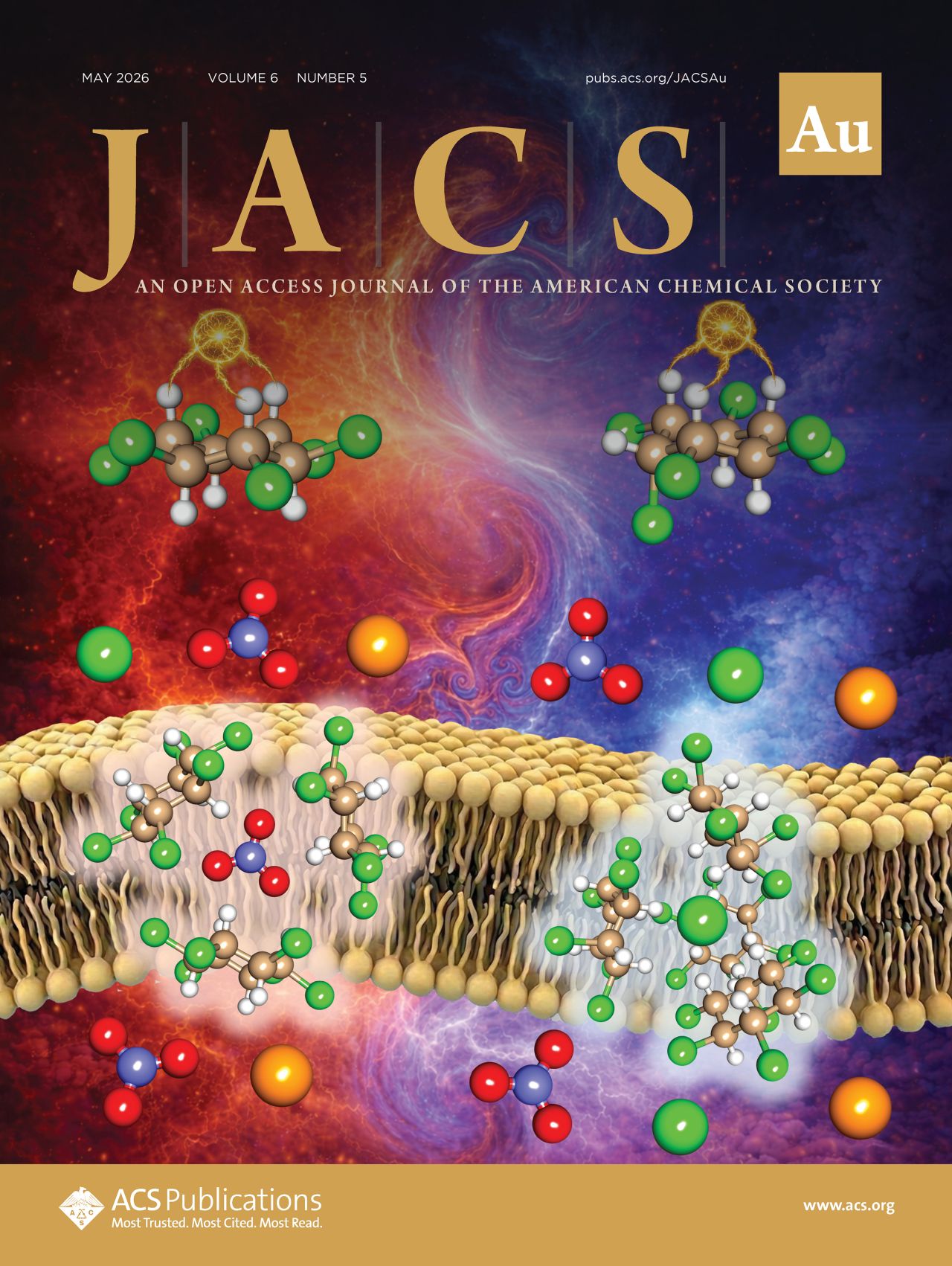
Same atoms, different shape, opposite result.
We have a new paper out in JACS Au on how small molecules carry chloride across a membrane. The question was simple: what decides whether a given molecule can do it? My guess going in was binding strength. It turns out to be shape.
We compared two close twins, the β- and δ-forms of hexachlorocyclohexane. They grip a chloride ion about equally well in solution. Yet only the roomier δ-form ferries chloride across a lipid membrane. The more crowded β-form barely moves it, even though it binds just as tightly.
The simulations and the lab measurements point to the same story. Crossing a membrane means stripping the water off the ion first, which costs a lot of energy. To pay that cost, the molecule's weak C-H bonds have to act together, cooperatively. The δ-form has enough room for them to cooperate. The β-form is too crowded, so the cooperation never happens and the ion stays put.
So the practical takeaway, for anyone trying to design artificial ion transporters (think channel-replacement strategies for cystic fibrosis): tune the scaffold's shape, not just how tightly it grips. Binding strength in solution is a poor predictor of transport. Room to cooperate is the lever.
Work led by Mihail Barboiu and co-authors, funded by the ANR (BIOWATER and AQUAFOLDAMERS). To my knowledge this is a clean example of steric control deciding cooperative transport, and I find it a satisfying one.
Plain-language summary on Kudos: link.growkudos.com/1e7anemlfk0